
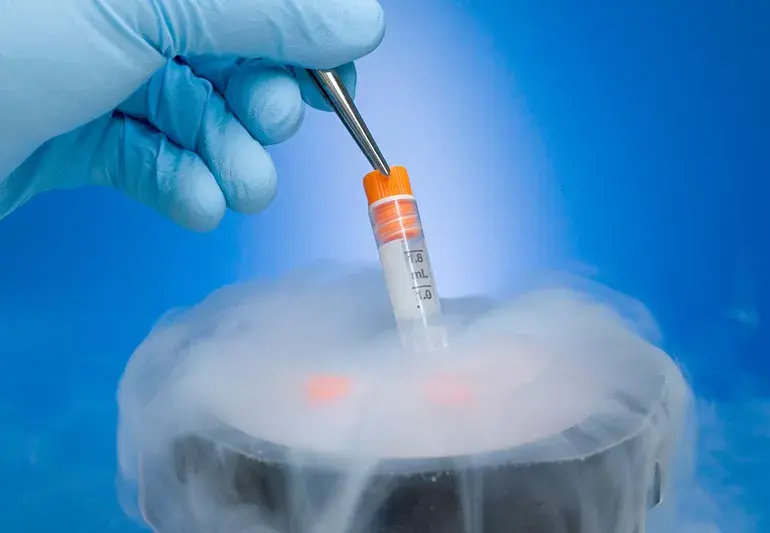
Egg Freezing
What is Egg Freezing?
Egg freezing, or oocyte cryopreservation, is a fertility preservation process where a woman’s eggs are retrieved, frozen, and stored for future use. When the time feels right, these frozen eggs can be thawed and used to conceive through in vitro fertilization (IVF).
This process empowers women to preserve their fertility, giving them the flexibility to delay motherhood until they’re ready—whether it’s for personal, health, or career-related reasons.
Egg Freezing and Age
A woman is born with 1-2 million eggs—that’s her entire ovarian reserve for life. By the time she reaches puberty, this number drops to around 300,000-400,000. So, what happens to all those eggs? It’s part of the natural aging process.
Even with 300,000-400,000 eggs, only about 300-500 will ever mature enough to ovulate. During each menstrual cycle, several follicles (tiny sacs containing eggs) prepare for ovulation, but only one dominant follicle releases an egg. The rest are lost along the way.
This natural decline speeds up with age. Around 1,000 immature eggs are lost each month, and by the time a woman reaches 30, only about 10% of her original reserve remains. By 40, this drops further to just 3-5%. Eventually, menopause occurs when the ovaries have almost no eggs left, and natural ovulation ends.
Egg Freezing is Affordable
Secure your fertility without the financial strain. Our affordable egg freezing option offers transparent pricing and flexible payments, making it easier to plan for tomorrow on your terms. More time, more choices, more control —all within reach .
What’s more we have made it very simple and hassle-free. One time booking and you need not renew every year , until next 5 years all taken care of in one go. Connect more with our team .
Who Can Benefit from Egg Freezing
Egg freezing is a practical option for many women, particularly those facing specific life circumstances.
- Young Professionals: Women in their late 20s or early 30s who are prioritizing career development or education often opt for egg freezing to preserve their fertility for future family planning.
- Cancer Patients: Women undergoing treatments like chemotherapy, which can impact fertility, are encouraged to consider egg freezing beforehand. It’s essential to discuss this with healthcare providers early.
- Women with Endometriosis: Endometriosis can affect fertility over time. The American Society for Reproductive Medicine (ASRM) recommends early intervention to explore options like egg freezing.
- Genetic predisposition or Family History of Early Menopause: Women with a family history of early menopause may choose to freeze their eggs to ensure they have viable eggs for future use.
- Women Considering IVF: Women planning to undergo IVF may choose to freeze eggs to increase their chances of success.
Egg Freezing Process
Step 1: Fertility Testing and Assessment
Your journey begins with a consultation to discuss your medical history and fertility goals. On the third day of your menstrual cycle, blood tests will be conducted to check your hormone levels and assess your ovarian reserve. A vaginal ultrasound will also help identify structural issues and estimate how many eggs can be retrieved. Using this information, your doctor will create a personalized treatment plan.
- Time Commitment: 1-2 clinic visits over a few days.
Your journey begins with a meeting with your fertility doctor, where you’ll discuss your medical history and what you hope to achieve. On the third day of your period, you’ll have some blood tests to check your hormone levels. These tests help determine your current fertility status, also known as your “ovarian reserve.” A vaginal ultrasound will also be done to check for any structural issues and to estimate how many eggs can be retrieved. With this information, your doctor will create a personalized treatment plan just for you.
Step 2: Ovarian Stimulation
During this phase, hormone injections are administered over 10–14 days to encourage your ovaries to produce multiple eggs. Your doctor will monitor progress through regular ultrasounds and blood tests, adjusting medication as needed. Once the eggs are ready, a “trigger shot” is given to prepare them for retrieval.
- Lifestyle Adjustments: Avoid vigorous exercise, limit alcohol and caffeine, and follow your doctor’s guidance to ensure optimal results.
- Symptoms: You may experience mild fatigue, bloating, cramping, or mood swings—similar to a regular menstrual cycle.
- Time Commitment: 4-6 monitoring visits over two weeks.
Step 3: Egg Retrieval
Approximately 35 hours after the trigger shot, the eggs are retrieved in a minor outpatient procedure. Under anesthesia, a fine needle guided by ultrasound is used to collect the eggs from your ovaries. The procedure takes about 3-4 hours at the clinic, including preparation and recovery.
- Recovery: You’ll need someone to drive you home, and most people return to work within 24-48 hours. It’s normal to feel mild cramping or bloating for a few days.
- Time Commitment: 1 day.
Step 4: Egg Freezing
The retrieved eggs are immediately frozen using vitrification, a rapid cooling process that preserves their quality. The embryologist will update you on how many mature, healthy eggs have been stored safely for future use.
What Happens After Egg Freezing?
Once your eggs are frozen, they are safely stored in a secure facility until you’re ready to use them. Your eggs remain in a frozen state indefinitely, as vitrification technology allows eggs to
Fertilization and Embryo Development
- Thawing: When you’re ready to proceed with pregnancy, the frozen eggs are carefully thawed using a precise warming process. The goal is to ensure as many eggs as possible survive the thawing process.
- Fertilization: Each egg is combined with sperm through a process called ICSI (Intracytoplasmic Sperm Injection), where a single sperm is injected directly into an egg to increase the chances of fertilization.
- Embryo Development: Once fertilized, the embryos are monitored for growth in a lab for about 3-5 days, reaching the blastocyst stage. At this point, they are ready for transfer.
Embryo Transfer
- Preparation for Transfer: To prepare your body for transfer, you may be prescribed hormone medications to thicken the uterine lining.
- Embryo Transfer: The embryo is transferred into your uterus using a soft, thin catheter under ultrasound guidance. This is a non-invasive, pain-free procedure that requires no anesthesia.
- Post-Transfer Monitoring: After the transfer, you’ll be advised to rest and avoid strenuous activities. You may be asked to return to the clinic for a pregnancy test approximately 10-14 days later to confirm if implantation was successful.
Egg Freezing Facts
- Egg Freezing is a Popular Option: Women are increasingly choosing to freeze their eggs to preserve fertility and plan for the future . Many celebrities have chosen egg freezing in the last few years.
- Long-Term Preservation: Eggs can be stored for many years without a significant loss in quality, providing flexibility for future family planning.
- Higher Success Rates with Younger Eggs: Freezing eggs in your 20s or early 30s offers the best chances for future use.
- Advanced Freezing Techniques: Vitrification, a modern freezing method, ensures better preservation of eggs for later use.
- A Personalized Fertility Journey: Egg freezing gives women control over their fertility journey, offering the flexibility to start a family later on their own terms.
- Quick and Convenient Process: Egg retrieval takes around 10-14 days, allowing women to return to daily life soon after
- Not Just for Career-Driven Women: Many women choose to freeze eggs for medical reasons, including genetic disorders or other health conditions that may affect fertility later.